
Every autumn, since LOCK CHUCK’s first year, we have returned to the same subject: school, study and the pleasure of learning. There is something endlessly intriguing about the unknown. The more we learn, the more we realise how much remains beyond us — and somehow, that only makes us want to go further. Over the years, we have also been lucky to meet many people at LOCK CHUCK who seem to share this instinct. Some began as customers and became friends. Pete is one of them.
We first met last year, shortly after he arrived in Guangzhou from New Zealand, thousands of kilometres from home. Part of his work was to build connections with the local culture — although culture shock, naturally, arrived before those connections did. Earlier this month, he returned to New Zealand to get married, then came back to Guangzhou and hosted a party for friends here. Over the course of a year, I had watched this city become the setting for a series of important changes in his life: settling into unfamiliar surroundings, building a life far from home, welcoming his fiancée, getting married back in New Zealand, then returning to celebrate with the community he had found here. At the party, I told him I admired the curiosity and courage he brought to so much uncertainty. He laughed, patted me on the shoulder and said he saw the same courage in me.
I had never planned a career in coffee. At the time, I was working towards a PhD in electrical engineering and tutoring a few middle-school students in English in my spare time. Neither activity appeared to have much to do with coffee. The tutoring began easily enough, then the questions started. Why does English need tenses when Chinese seems to manage without them? Why does an English sentence sometimes have to be structured in a way that feels almost backwards in Chinese? Why can’t we simply translate one language into the other, word for word? Too often, the answer offered at school was simply: “That’s just how English works. Memorise it.” That answer never quite satisfied me. This was about 15 years ago, before almost every obscure question could be answered in seconds, and finding a convincing explanation often meant searching through books, articles and examples, following one question until it led to another. I used to joke that I was doing two kinds of research at once: one in electrical engineering, the other in language.
Eventually, something clicked. Language was not simply a system of vocabulary and grammar. It carried the habits, assumptions and history of the culture that produced it, and differences in expression often reflected differences in the way people saw the world. To understand the language, I had to look behind it. Teaching, I came to realise, was another form of learning. The more I taught, the more I learned, and the more curious I became about the wider world beyond the classroom. That search opened a much larger world than I had expected, and it also made the prospect of spending the rest of my working life repeating what I already knew increasingly difficult to imagine.
Then Vienna entered the story. I found myself surrounded by coffee houses that had been part of the city for generations. In one of them, I sat at a table marked with the name of someone who had once been there before me. Writers, artists and thinkers had spent hours in places like this, talking, reading and making work. Sitting there, an idea arrived with unusual clarity: I wanted to build a coffee shop of my own — not simply a place that sold coffee, but a place for meaningful cultural connections. That thought eventually became LOCK CHUCK.
My PhD supervisor often reminded me that reproducibility is one of the fundamental principles of science. I still think about that behind the coffee bar. In the beginning, even something as simple as latte art could be frustratingly inconsistent. A failed pour did not make me want to stop; it made me want to know why. Was it the milk, the temperature, the texture, the movement of the hand? Coffee became another field of research. As in engineering, and as in language, one answer usually revealed another question, and the deeper I went, the more interesting the subject became. Behind something as ordinary as a cup is an almost endless chain of variables, places, people and decisions.
From time to time, I think about what I actually remember from school. I have probably forgotten a fair amount of the material itself: equations, course notes, perhaps even entire subjects. What has stayed with me is something less specific and more useful — the habit of asking questions, and the confidence to keep going when the answer is not immediately visible. Back at Pete’s party, he asked how our Tokyo project was going. I have told him before how much I have learned from the coffee shops, designers and operators in Tokyo. It is a city that has given me an enormous amount of inspiration over the years, and after more than a decade of sharpening our own ideas in Guangzhou, I feel ready to enter that conversation more directly — to work in a city I have long admired, to join its fierce competition, and to discover what we still have to learn.
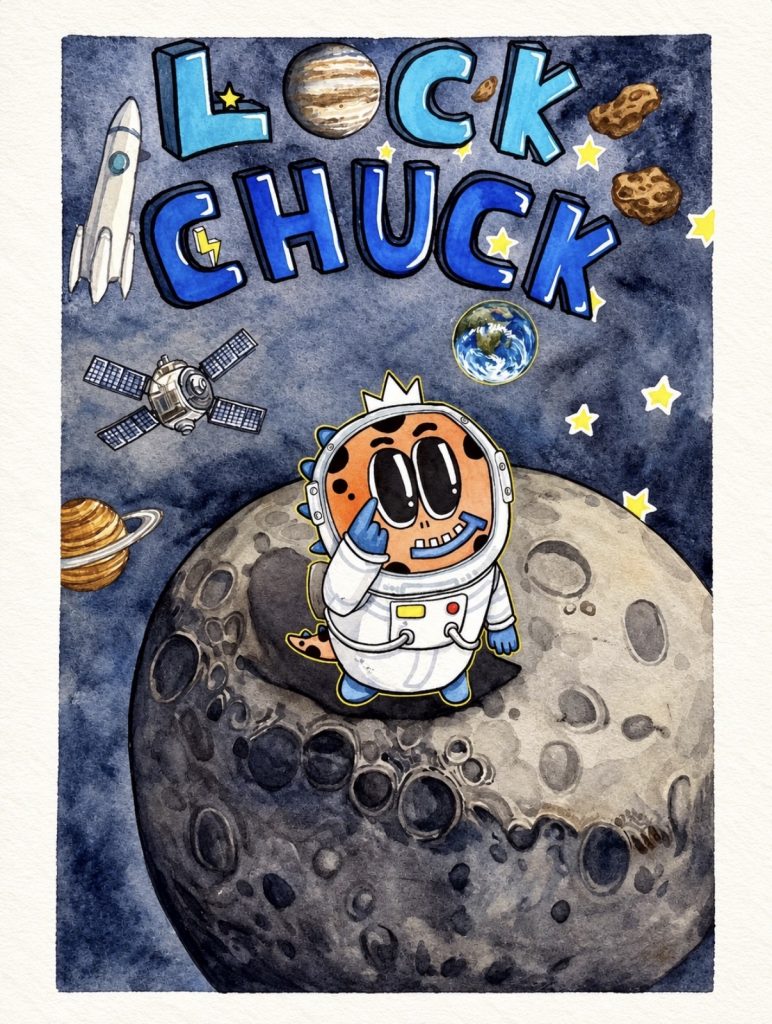
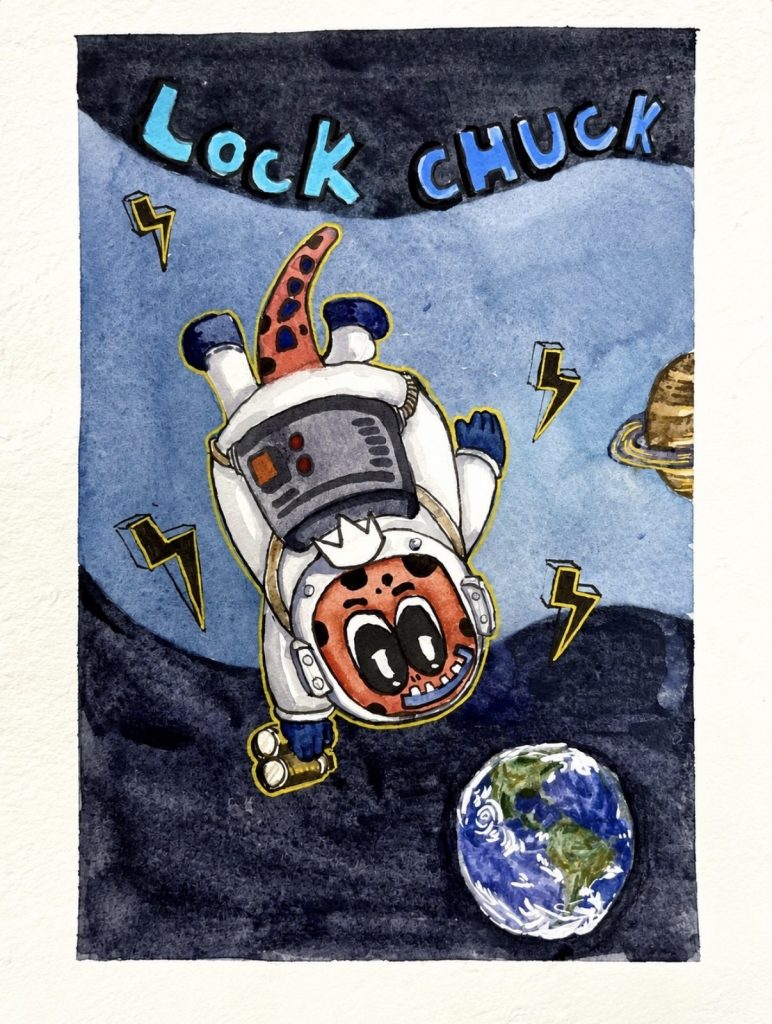
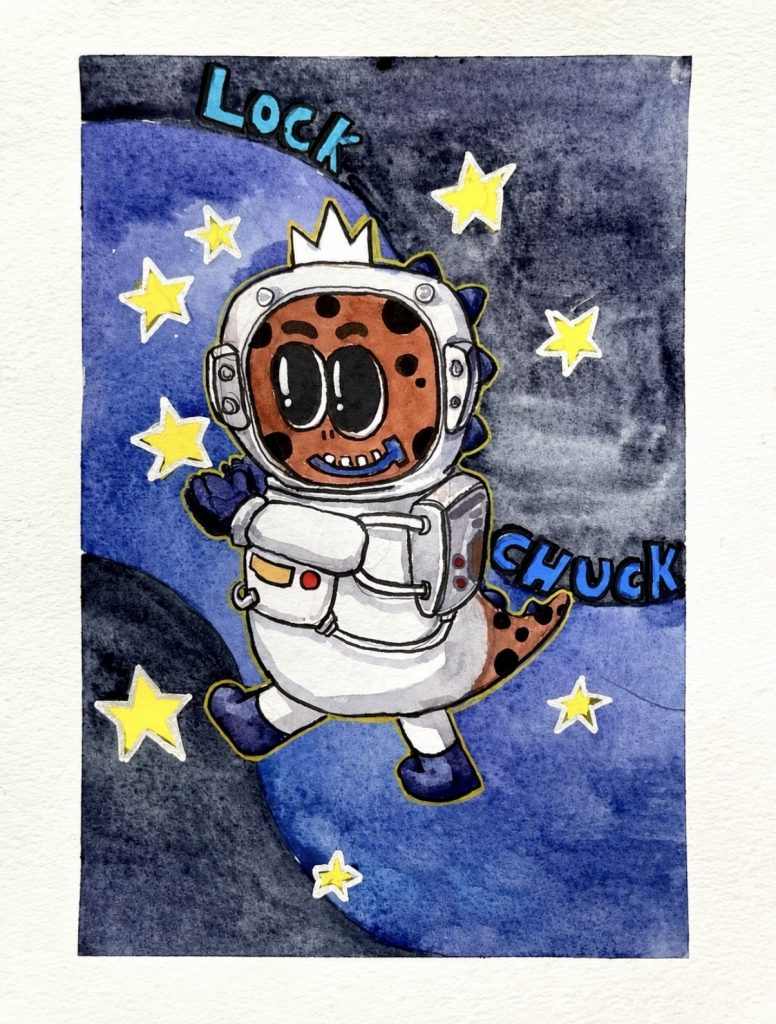
There is comfort in knowing what you are good at. There is something more exciting in finding out what comes next. For this year’s autumn campaign, we invited Xiaomiao, an art student from a nearby university, to give visual form to that curiosity and courage. In his work, which now appears on our seasonal window and menu, our mascot Watermelong becomes an astronaut, drifting among the stars and venturing into the great unknown.
GOOD COFFEE. GREAT UNKNOWN.